Judgment liens don't live on the deed or in the mortgage chain — they attach through the court and county records tied to the owner's name, so a document-only title search can miss them.
Once a certified copy or abstract of judgment is recorded, the lien can attach to every non-exempt property the debtor owns in that county — and often to property they buy later.
Homestead protection can block a judgment lien from attaching, but the rules vary sharply by state and are easy to misread.
Most judgment liens run about 10 years and are renewable, so an "old" judgment is not automatically stale.
Clearing one takes a documented payoff or release plus a recorded satisfaction — and someone tracking that it actually hits the record.
A clean legal description and an unbroken chain of deeds can still hide a closing-killer. Judgment liens — money judgments from lawsuits, unpaid debts, and collections — don't ride on the deed and don't show up in the mortgage history. They attach to a person, then to that person's property. That mismatch is exactly why they slip past a rushed search and surface the day funds are supposed to move.
For title agents, settlement attorneys, and lenders, judgment liens are one of the most common "where did this come from?" problems at the closing table. Here's how they attach, why they hide, and a repeatable workflow to catch and clear them before they cost you a deal.
What a Judgment Lien Actually Is
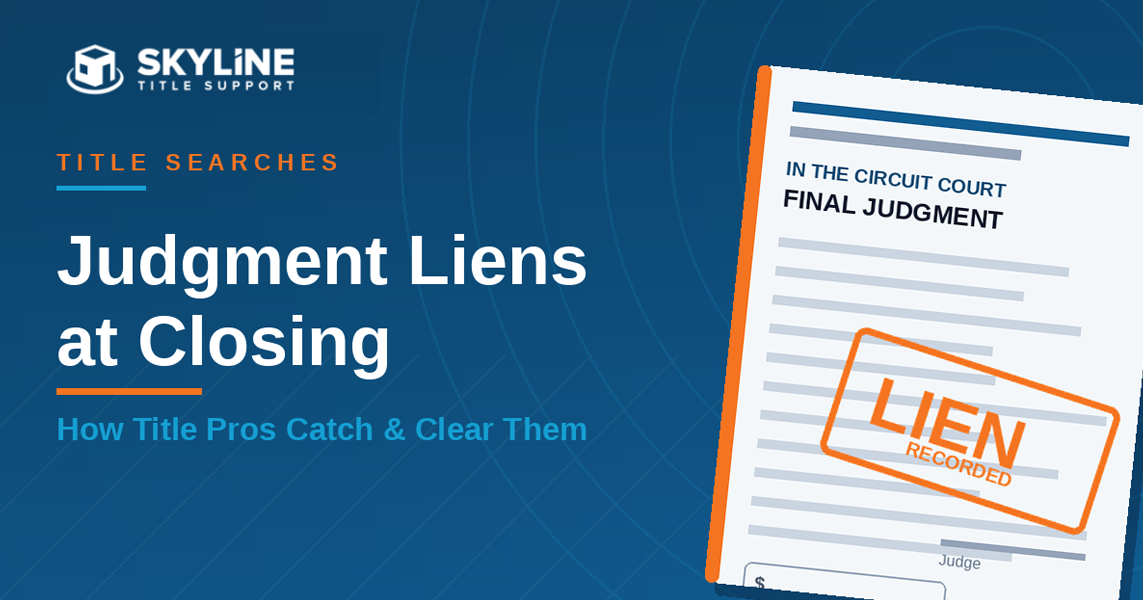
A judgment lien is created when a creditor wins a money judgment in court and then records that judgment — usually a certified copy or an abstract of judgment — in the county where the debtor owns real estate. Recording is the step that converts a courtroom win into a lien against real property.
The key distinction: a judgment lien is name-based, not property-based. It isn't recorded against a specific parcel the way a mortgage is. It attaches to the debtor's interest in real property because the debtor's name matches. That's why judgment liens are found through name and court-record searches, not by reading the deed.
Why It Hides
A standard document-image search follows the parcel and the recorded instruments tied to it. A judgment against the seller was never recorded "against the property" — it was recorded against the person. If the seller's name isn't run against the judgment and lien indexes, the lien stays invisible until it blocks the payoff.
How Judgment Liens Attach — and Follow the Owner
Attachment generally happens the moment the certified copy or abstract of judgment is recorded in the county land or judgment records. From there, two features make judgment liens dangerous at closing:
They sweep broadly. The lien typically attaches to all non-exempt real property the debtor owns in that county — not just the property being sold.
They can catch after-acquired property. In many states, while the lien remains enforceable, it also attaches to real property the debtor buys after the judgment was recorded. A buyer with an open judgment can encumber the very home they're purchasing.
Duration matters too. In many states a real-property judgment lien lasts about 10 years and can be renewed for another term by re-recording before it expires. Treat an aging judgment as live until you confirm otherwise — a lien recorded years ago may still be fully enforceable, and interest may have been accruing the whole time.
A judgment lien attaches to a name, then to everything that name owns — which is why the cleanest-looking parcel can still carry someone else's debt.
The Homestead Trap
Homestead protection is where good title professionals get tripped up. In many states, a judgment lien does not attach to a debtor's homestead — the primary residence they own and occupy — either partly or entirely. Florida's constitutional homestead protection is among the strongest in the country; Texas offers robust homestead protection as well; other states cap protection at a dollar figure that changes over time.
Compliance Warning
Never assume "it's homestead, so we're fine." Homestead status has to be established, the protection is not always total, and it can evaporate when the property stops being the debtor's residence — for example, on the sale itself or a conversion to a rental. Confirm the exemption on the facts of the specific deal, ideally with underwriting or counsel, before you waive a lien off the commitment.
A 5-Step Workflow to Catch and Clear Judgment Liens
The goal is simple: know every judgment tied to every party in the chain, confirm which ones actually attach, and get the ones that do off the record before you disburse.
Catch & Clear Workflow
Run current owner & encumbrance work. Start with a full title search so you know the parcel, the vesting, and the recorded instruments before you layer in name results.
Search every name against judgment & court indexes. Run all sellers, the buyer, and relevant prior owners — including entities and known aliases — against county judgment records and dockets. This is where hidden liens surface.
Confirm identity on every hit. Match middle names, addresses, and dates of birth. A common name produces false positives; the fix is documentation, not a guess.
Get a payoff or release figure. For each attaching lien, request a written payoff (with accrued interest) or a conditional release from the judgment creditor or their counsel.
Record the satisfaction and track it. Pay through closing, then confirm the satisfaction or release is actually recorded. An unrecorded release is not a cleared lien.
Two of those steps are where deals quietly go wrong. Identity matching gets skipped under deadline pressure, and the recorded release never gets verified. A disciplined title search handles the first; structured release tracking closes the loop on the second so a "paid" lien doesn't reappear on the next owner's commitment.
Where Judgment Liens Sit in the Priority Stack
When multiple claims hit the same property, priority decides who gets paid from the proceeds. Judgment liens generally rank by their recording date and sit below super-priority government liens and a properly recorded first mortgage — but "generally" hides real exceptions, so confirm order on every file.
Typical Lien Priority
Because priority follows the recording date, an older judgment can outrank a newer one — and a judgment recorded before a refinance can jump ahead of the new loan if it wasn't cleared. That's why catching every judgment early, not just the obvious one, protects both the buyer and the lender.
Frequently Asked Questions
Will a standard title search always find a judgment lien?
Not necessarily. Judgment liens are tied to a person's name, not the parcel, so they surface through name and court-index searches. A document-only search of instruments recorded against the property can miss a judgment recorded against the owner, which is why running every party's name matters.
How long does a judgment lien last?
In many states a real-property judgment lien lasts about 10 years and can be renewed for another term if the creditor re-records before it expires. Timeframes and renewal rules vary by state, so verify the specific jurisdiction rather than assuming an old judgment has expired.
Does homestead protection mean the lien can be ignored?
No. Homestead can block a judgment lien from attaching in many states, but the protection is not always total, has to be established on the facts, and can change when the property stops being the debtor's residence. Confirm the exemption with underwriting or counsel before waiving anything.
A judgment was paid years ago — why is it still on the property?
Paying the judgment does not clear the lien until a satisfaction or release is recorded. If that recording step was skipped, the lien lingers on the record and can stall the next closing. Tracking the recorded release is essential.
Clear the Record Before You Reach the Table
Judgment liens are hidden precisely because they follow the owner instead of the parcel. Catch them with disciplined name searching, confirm which ones truly attach, and make sure every payoff ends in a recorded satisfaction. Do that consistently and these liens stop being closing-day surprises.
Need judgment and name searches you can rely on, or help tracking releases to the record? Request a quote from Skyline Title Support and put a nationwide team on catching what a document-only search misses.
CDD assessments ride on the Florida tax bill and hide a bond debt that standard title searches miss. How title pros find, prorate, and clear them at closing.
Leased and financed solar panels file UCC-1 fixture liens that quietly cloud title and stall closings. Here is how title pros catch and clear them fast.
Florida's tax certificate sale closes by June 1. Learn how these liens cloud closings, how redemption interest works, and how title pros clear them fast.