Key Takeaways
- The 2026 ALTA/NSPS Land Title Survey standards took effect February 23, 2026, replacing the 2021 version for any survey commenced on or after that date.
- The current title commitment and exception documents are now a required input the surveyor relies on directly — order it late and the survey waits.
- A new, optional Table A Item 20 puts encroachments, setback issues, and access gaps in one summary table, which should cut down on back-and-forth with the title insurer.
- Certifications can now extend to a lender's successors and assigns on request, heading off recertification after a loan sells on the secondary market.
- Most changes land on the ordering desk, not the field crew: update your order language, Table A templates, and checklists.
If your closings touch commercial deals, entity buyers, or lenders who insist on an ALTA/NSPS survey, the ground shifted on February 23, 2026. That is the day the 2026 ALTA/NSPS Minimum Standard Detail Requirements replaced the 2021 version for every survey commenced on or after that date.
The surveyor still does the fieldwork. But the new rules change what you order, what you have to hand the surveyor, and how early you have to do it. Here is what actually changed and how to adjust your ordering so a survey never becomes the thing holding up your table.
What changed on February 23, 2026
The 2026 revision is less about new fieldwork and more about clarity — defining who is responsible for what, and standardizing how surveyors report problems. The updates that matter most to a title or settlement team:
- The title commitment is now a required input. The surveyor must receive the most recent title commitment (or equivalent title evidence) before completing the survey.
- Adjoining deeds shift to the surveyor. Title insurers no longer have to furnish adjoining-property deeds; the surveyor obtains them through independent research.
- A new encroachment summary table (Table A Item 20). When requested, it collects boundary, easement, and setback encroachments, third-party use without a recorded easement, and access that depends on common ownership of an adjacent parcel.
- Written sign-off on imagery. If aerial or satellite imagery is used for certain features (Item 15), the surveyor and client must agree in writing, and the survey must cite the imagery source and date.
- Broader certifications. On request, certification can run to the lender's successors and assigns.
- More documented observations. Discrepancies between record and field, verbal statements from owners or occupants about boundaries or title, and evidence of possession along the perimeter must now be noted in writing on the survey.
A survey reads the land; a title search reads the record. The 2026 standards just made the hand-off between them tighter — and more dependent on you.
Why these changes land on your desk
It is tempting to file a surveyor-standards update under "not my problem." Three of the biggest changes say otherwise.
First, the title commitment requirement flips the usual timeline. Under the 2021 standards a survey could move in parallel with title work. Now the surveyor is waiting on your commitment and exception documents, so a late order ripples straight into the survey delivery date.
Second, the Item 20 encroachment table is a due-diligence gift — but only if you ask for it. It gathers the physical red flags that drive endorsement decisions, easement cures, and price adjustments into one place instead of scattering them across the drawing.
One caution on Item 20
The surveyor identifies and locates these conditions; the surveyor does not offer legal or ownership opinions. A fence three feet over the line shows up on the table, but whether that strip belongs to your seller is a title and legal question — yours to run down, not the surveyor's to answer.
Watch the Transition
Ordered a survey in February but closing in April? Surveys commenced before February 23 still run under the 2021 standards. Parties can ask for the 2026 reference on a survey already in progress, but the surveyor may charge for the revisions it requires. Decide up front rather than at the closing table.
How to order surveys under the 2026 standards
None of this requires a new workflow — just a few deliberate changes to how you place and track an order.
Ordering Surveys Under the 2026 Standards
- Name the standard in the order. For any survey commenced on or after February 23, 2026, cite "2026 ALTA/NSPS" by name so there is no ambiguity about which version governs.
- Send the title commitment up front. The surveyor now relies on the current title commitment and exception documents directly. Get them over early — this is the single biggest timeline change in the new standards.
- Decide on Table A Item 20. Make the encroachment and access summary a default request on commercial and entity transactions, where boundary and access risk is highest.
- Confirm any imagery method in writing. If the surveyor will use aerial or satellite imagery under Item 15, agree to it in writing and make sure the survey cites the source and date.
- Request extended certification when the loan may sell. Ask that certification run to the lender's successors and assigns so a secondary-market sale does not trigger a recertification scramble later.
- Refresh your templates and checklists. Item 21 is now the write-in for custom requests. Update order forms and internal checklists so nothing still points at the old 2021 numbering.
Pro Tip
Because the standardized Item 20 table reports encroachments in one consistent format, title underwriters should need fewer separate encroachment statements. Getting the title commitment to the surveyor early is the fastest way to turn that efficiency into a shorter clear-to-close.
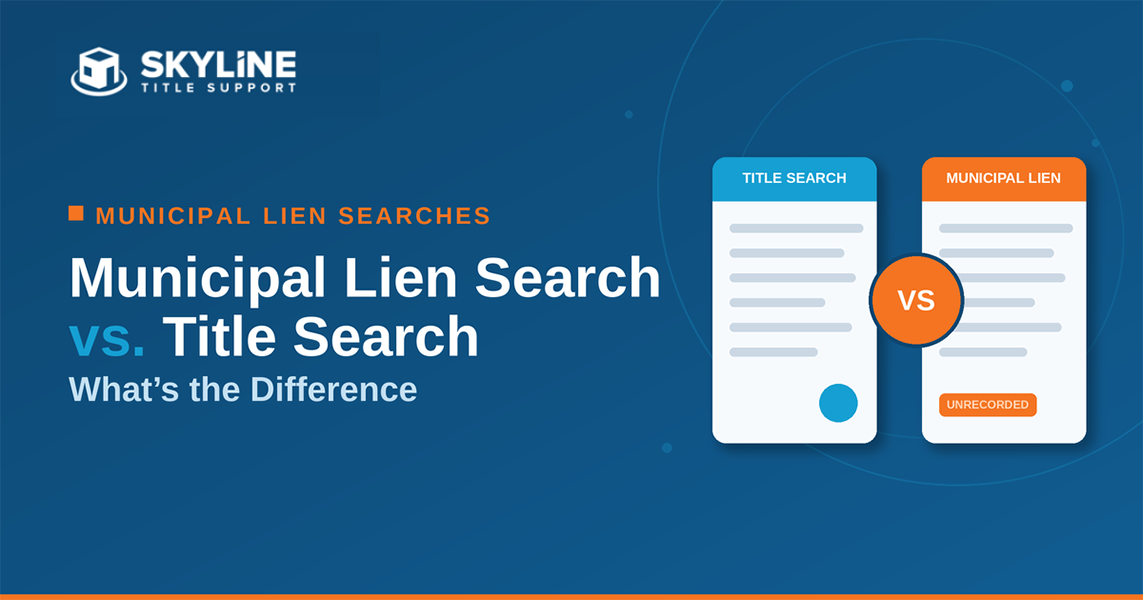
Survey vs. title search: what each one catches
The 2026 standards tighten the link between the two, but they remain different tools answering different questions. A clean title search and a current survey do not replace each other — they cover each other's blind spots.
| Title search | Land survey |
|---|
| Reads the public land records | Measures the parcel as it sits on the ground |
| Finds recorded mortgages, liens, judgments, and easements of record | Finds encroachments, boundary overlaps, setback violations, and uses with no recorded easement |
| Confirms the chain of title and legal description | Confirms the improvements and occupation actually match that legal description |
| Cannot see a fence three feet over the line | Cannot tell you who legally owns that three feet |
Frequently Asked Questions
When did the 2026 ALTA/NSPS standards take effect?
February 23, 2026. They apply to surveys commenced on or after that date; surveys already underway continue under the 2021 standards unless the parties agree to switch.
Does the new rule change who provides the adjoining deeds?
Yes. Title insurers no longer have to furnish adjoining-property deeds — the surveyor obtains them independently. The surveyor must still receive the current title commitment or equivalent title evidence before finishing the survey.
What is Table A Item 20?
A new, optional encroachment and access summary table. It documents boundary, easement, and setback encroachments, third-party use without a recorded easement, and access that depends on common ownership of an adjacent parcel. It records physical conditions, not legal conclusions.
Does every closing need a new survey?
No. Many residential closings rely on an existing survey plus a no-change affidavit when nothing on the ground has changed. A new ALTA/NSPS survey is usually driven by the lender, an entity buyer, or title-underwriting requirements on commercial and higher-risk deals.
Order surveys with the new standards built in
The 2026 standards reward teams that order early and order precisely. Skyline coordinates land surveys nationwide and keeps your order language, Table A requests, and certification wording current with the latest ALTA/NSPS requirements — so a survey is one less thing standing between you and a clean closing. Request a quote and tell us about your next transaction.