Mobile Notary Services are Now Available - Nationwide Coverage Learn More →



If you have ever opened a title commitment and felt your stomach drop when you hit the exceptions, you are not alone. Buyers often see a long list of legal terms and assume the property has “problems.”
Here is the truth. Many exceptions are standard, many are manageable, and a few deserve immediate attention. The goal is not to memorize legal language. The goal is to know what to look for, what questions to ask, and what can be cleared before closing.
This guide walks you through a practical way to review a title commitment and explains 12 common exceptions that tend to spook buyers, even when they do not kill the deal.
A title commitment is a title company’s written promise to issue a title insurance policy after certain conditions are met.
Most commitments are organized into:
A simple way to think of it:
This is where silly mistakes can cause big delays.
Check:
If something is off here, fix it early. It is much easier than correcting it at the last minute.
Buyers and agents often focus on exceptions and miss the bigger issue. A requirement that cannot be satisfied is usually the real deal stopper.
Examples of requirements:
Exceptions typically fall into a few buckets:
Once you identify the bucket, you can usually predict what the next step should be.
What it means: Future taxes are not yet billed or delinquent, so they may not show as a precise payoff figure at the time of search.
Why it scares buyers: They worry they will inherit unknown bills.
What to do: Confirm tax status with current tax records and make sure prorations are handled correctly on the settlement statement. If there are delinquent taxes, those should show separately and must be addressed.
What it means: Without a current survey, the insurer is not automatically covering boundary or encroachment issues.
Why it scares buyers: It sounds like the title company “does not know where the property is.”
What to do: If the lender or buyer wants stronger protection, order the right type of survey for the transaction. In some cases, providing a recent acceptable survey allows the title company to remove or narrow the survey exception. This is common in commercial deals and certain lender programs.
What it means: Someone has a legal right to use a portion of the property for a specific purpose, often power lines, water, sewer, cable, or drainage.
Why it scares buyers: They picture the utility company digging up the backyard whenever they want.
What to do: Review the easement document and, if possible, the sketch or description. Many easements sit along lot lines or in standard utility corridors. Red flags include easements that cut through buildable areas, or access easements that benefit someone else’s driveway.
What it means: The property is subject to recorded rules, often related to appearance, setbacks, fencing, rentals, or architectural approvals.
Why it scares buyers: Buyers fear they cannot use the property how they want.
What to do: Ask for the governing documents and read the sections that matter to the buyer. For example, short-term rental restrictions, parking rules, and fence approvals are common deal friction points. CC&Rs are not automatically “bad,” but buyers should know what they are buying into.
What it means: Someone living in or using the property may have legal rights that are not obvious from public records.
Why it scares buyers: They worry about a surprise tenant or a squatter situation.
What to do: Confirm occupancy status. If it is a rental, the lease should be reviewed. In commercial deals, an estoppel certificate from tenants is often part of due diligence. In residential deals, verify vacant possession expectations and confirm any occupancy agreements in writing.
What it means: There may be dues, special assessments, transfer fees, approval requirements, or past due amounts tied to the association.
Why it scares buyers: HOA surprises can get expensive and delay closing.
What to do: Order the estoppel early and confirm:
This is one of the easiest items to manage if started early, and one of the worst if started late.
What it means: A recorded loan exists and must be satisfied and released.
Why it scares buyers: They assume the seller cannot sell.
What to do: This is typically a requirement, not an exception. The seller’s mortgage payoff is ordered, paid at closing, and the release is recorded afterward. The key is timing and accurate payoff figures. If the lender is slow, the deal gets stressful.
What it means: The search found a judgment that may or may not belong to the seller.
Why it scares buyers: They worry the seller is in trouble financially, and the property is attached.
What to do: Confirm identity through supporting information, such as middle initial, address history, date of birth where legally available, or affidavits used in your jurisdiction. If it is a true match, it usually must be paid or satisfied. If it is not, the solution is documentation, not panic.
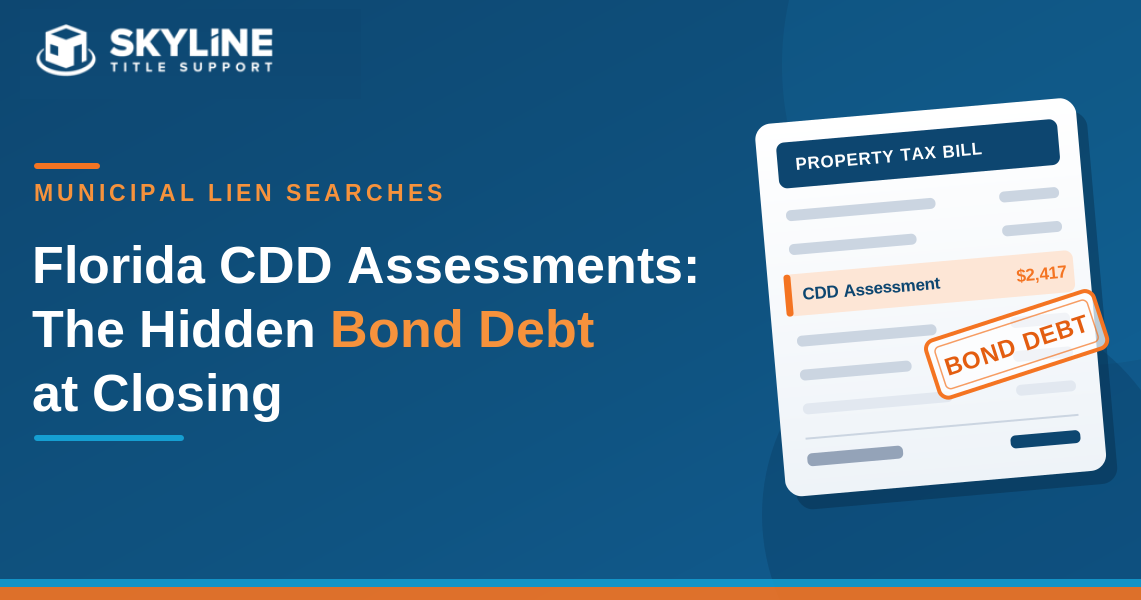
What it means: Some municipalities and districts can attach charges to the property, not just to the person.
Why it scares buyers: They fear hidden debt.
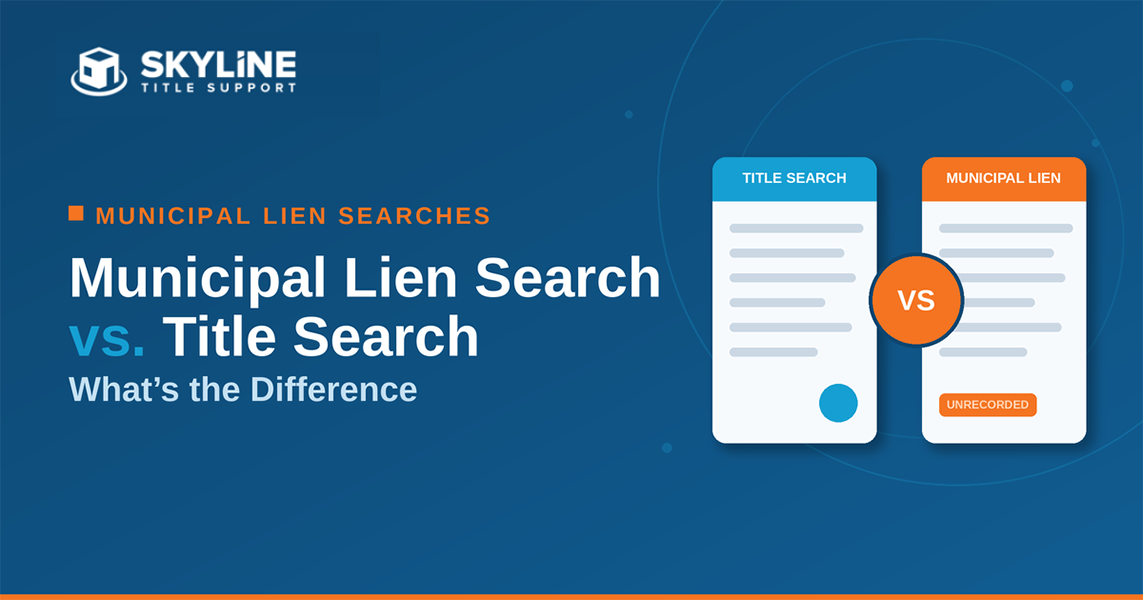
What to do: Order municipal lien searches and confirm utilities, code enforcement, and special assessments. These items are often outside the standard title search scope unless specifically ordered, depending on state and local practice. For buyers, this is where proper property due diligence matters.
What it means: Something was recorded years ago and never properly released in the records.
Why it scares buyers: They assume they will inherit someone else’s debt.
What to do: Many of these are paperwork issues, not real unpaid loans. Solutions can include obtaining a release, using a satisfaction piece, or in some cases following a statutory process if the lender no longer exists. Do not ignore it, but also do not assume it is a deal breaker.
What it means: There could be a foreclosure process, tax sale, or redemption period affecting ownership.
Why it scares buyers: Because it should. This can be serious.
What to do: Escalate quickly. Confirm the status, timeline, and whether clear title can be delivered. In some cases, a transaction can proceed with proper resolution. In others, it cannot. This is one of the exceptions that deserves immediate, careful review.
What it means: The record may not clearly show legal access to a public road.
Why it scares buyers: Legal access affects financing, resale, and practical use.
What to do: Identify how access is established, by recorded easement, by plat, or by public road frontage. If access is not clear, it is a major red flag, especially for lenders. This is also where a survey and local counsel can be essential.
Most title issues become stressful for one reason. They were discovered too late.
A strong workflow usually includes:
That is what keeps closings calm and predictable.
A title commitment is not a list of problems. It is a map showing what must be handled before closing and what will remain as recorded matters after closing. When buyers understand the difference, exceptions become less scary, and the closing process becomes much smoother.